< mvp-development />
MVP Development Company
A written scope, a fixed price and a date. The first version is software your users can sign into, not a clickable prototype. Built to learn, not to impress a demo room.
1. Conversation
Send what you have by form or WhatsApp: an idea, documents, specs or Figma files. An engineer replies the same day.
2. Proposal
We talk the project through wherever suits you: WhatsApp, email or a call. Scope, timeline and a fixed price get agreed in writing, and then the build starts.
3. Build
Delivery in phases against the proposal, with a named engineer and working hours that overlap yours.
If you are reading this, it is probably one of these:
- You need something real to show an investor or a first customer, and slides stopped being enough a while ago.
- Every quote you got is hourly with no ceiling, so nobody can tell you what the build costs or when it ends.
- The last team went quiet for weeks and came back with a demo that did not match what you asked for.
What you get
Scoped build, fixed price
We turn the idea into a written scope with a price and a delivery date attached. If you want something outside that scope, we price it before anyone writes code.
The version people can log into
Accounts, permissions, the core workflow and an admin view. Enough product that a real user can finish the job your product exists to do.
Payments from day one
Subscriptions, one-off charges or marketplace splits, wired to Stripe or whichever processor your market needs, with webhooks that do not drop orders.
Deployed and watched
We deploy it, set up error tracking and keep it running while you go talk to users. Where the product is hosted gets agreed during scoping, so nothing about that is a surprise later.
A handover you can act on
The delivered code, a readable structure and the decisions written down. If you hire in-house engineers later, they can pick it up without calling us first.
- Next.js
- TypeScript
- PostgreSQL
- Supabase
- Node.js
- Stripe
- Vercel
What goes in the first version, and what waits
An MVP is scoped around one job: the thing a user has to be able to finish for you to learn whether the product is worth building further. Everything that does not serve that job waits for evidence. This is where most first versions go wrong, not in the code but in the list.
Our scoping call ends with two lists in writing. The first is what ships. The second is what we deliberately left out and why, so that when a user asks for it you already know what it costs and how long it takes.
- Ships in the first version: accounts and roles, the core workflow end to end, one way to pay, an admin view for you, error tracking and a deploy that works on a Monday morning.
- Waits for evidence: subscription plans and proration, integrations with tools you do not use yet, native mobile apps, custom reporting, and every setting that could be a default for now.
- Decided per product: multi-tenancy. If your customers are companies with their own users, the data model has to allow for it from day one even when the first version only serves one of them.
MVP or SaaS build: which page should you be on?
This page is for the first version of a product that still has to prove itself with real users. If you already have people paying every month and the next step is plans, multi-tenant accounts, billing that runs itself and the admin tooling a support team lives in, you are past the MVP stage. Our SaaS development page covers that work, and the two projects are scoped differently.
The short rule: an MVP is built to learn, a SaaS build is built to scale. Both come from the same team, with the same fixed-scope contract, and a product that starts here can move there without a rewrite when the tenant model was chosen with care in the first version.
What decides the price and the date
Three things move the number more than the feature list does: how many external systems the product has to talk to, whether payments are one-off charges or subscriptions, and how much of the design already exists. A first version with accounts, one workflow and Stripe checkout is the simplest case. Add a marketplace split, an accounting integration and a mobile app, and both the price and the date move.
As a market reference, agencies that rank for this term in the US publish very different anchors. Instinctools advertises idea validation to a market-ready product in one to three months. S-PRO describes packages by scope rather than price and cites a project in the tens of thousands of dollars as an example. In our own review of 22 Clutch profiles of Brazilian and Latin American agencies in August 2026, most published a minimum project size of ten thousand dollars and their recent reviews clustered between fifty and two hundred thousand. The exact number for your build goes into the written proposal and holds for the scope in the contract.
Sources: Instinctools, MVP development services, S-PRO, MVP development services, Clutch, software developers in Brazil.
Built by us, running today
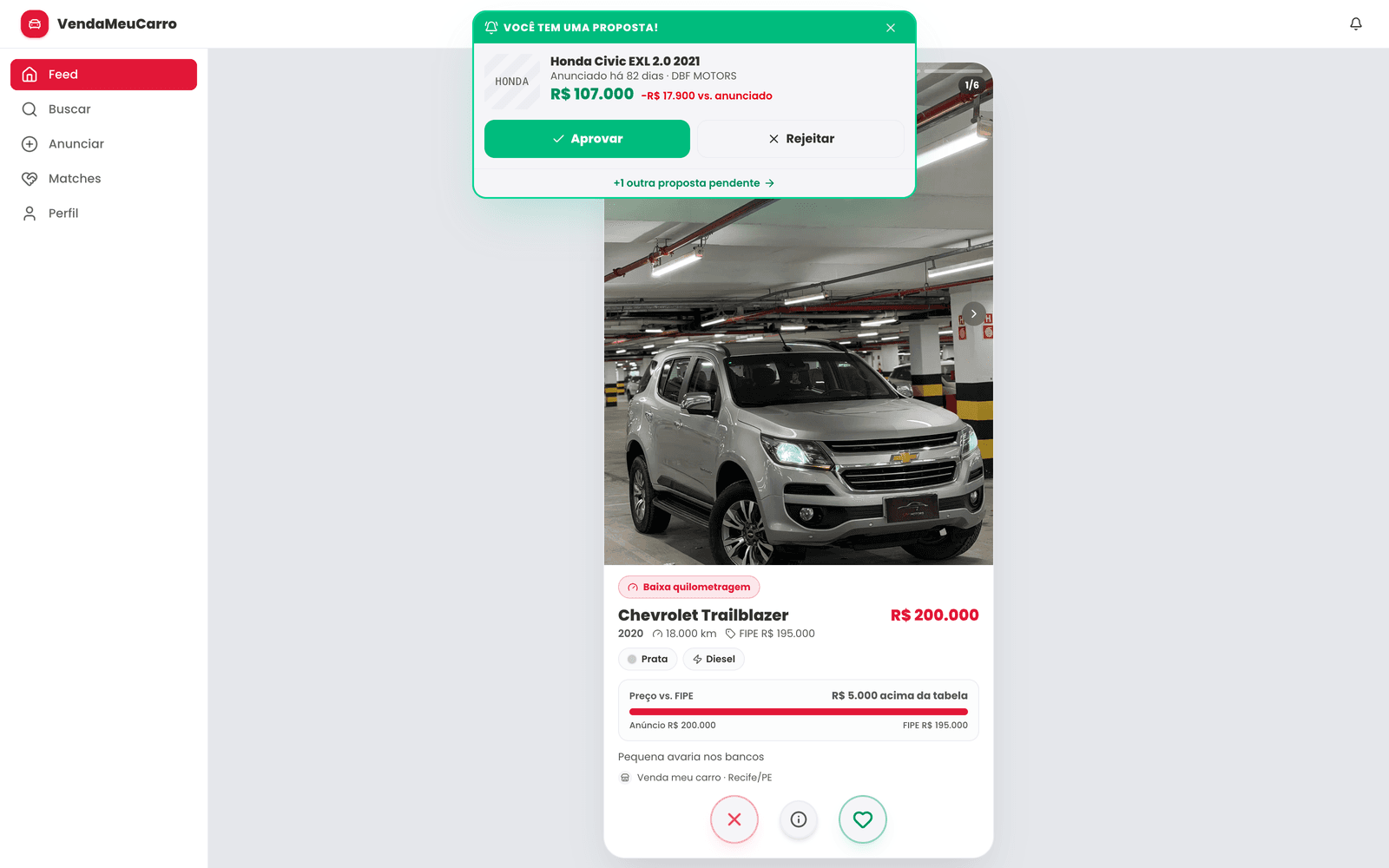
VendaMeuCarro
A B2B platform where car dealers list vehicles and trade proposals in real time. Shipped as a focused first version around one workflow, then extended.
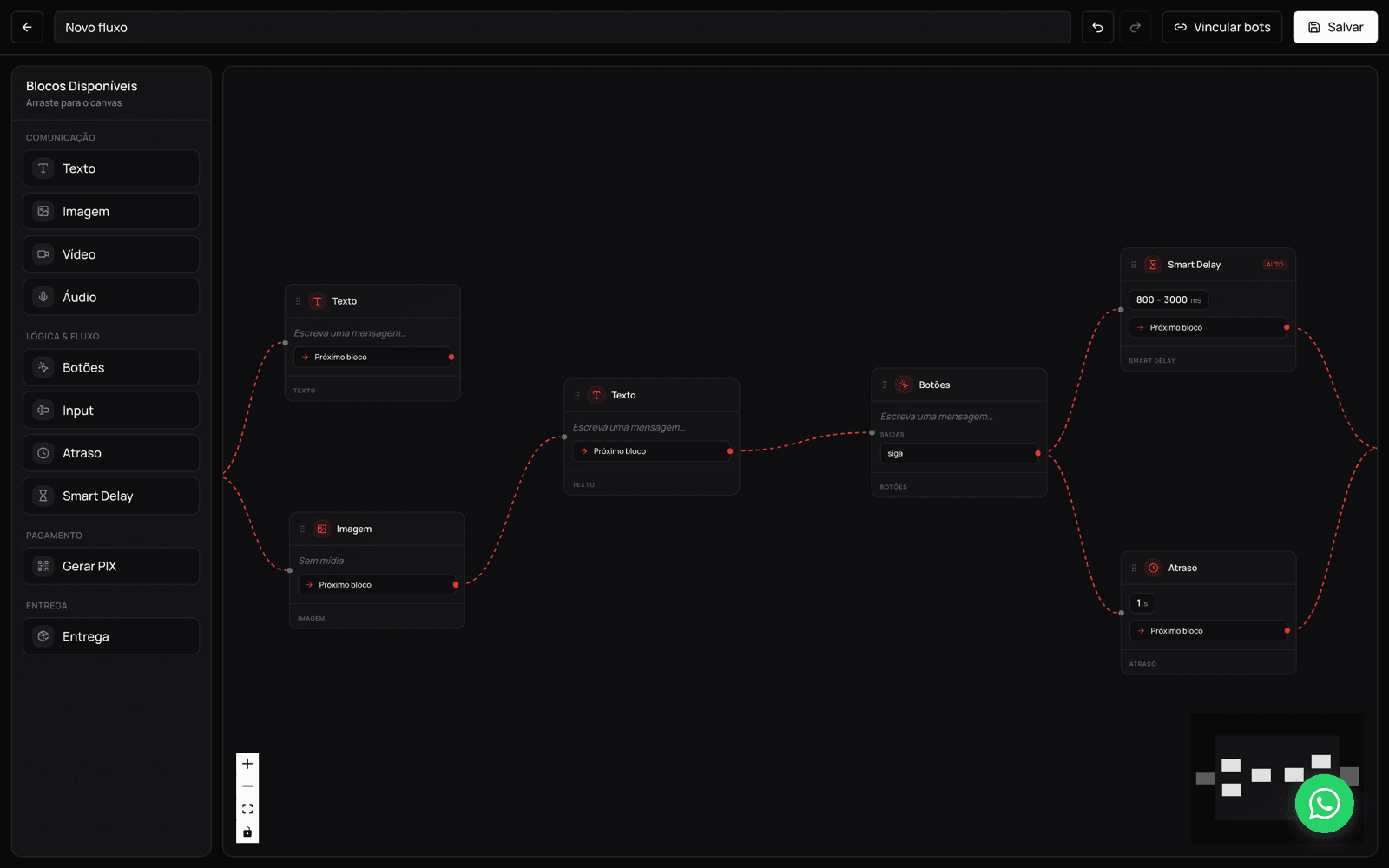
Mindbot
A platform for building Telegram sales bots with a visual flow editor, Pix payments and analytics. Accounts, the core editor and payments first; the rest came after launch.
Why work with VTA
- Our workday overlaps yours. A question you send in the morning gets an answer the same morning, with no overnight gap in the middle.
- You talk to the people building it. VTA is a small senior team with more than 150 projects delivered in more than three years, and the person answering you is the one writing the code.
- Brazilian rates stretch a US budget further for the same seniority. We put the whole project in one written quote, so you can hold it next to a local one before you commit.
Straight questions, straight answers
How much does an MVP development company charge?
Scope decides it, so we publish a floor instead of a price: our development projects start at US$ 25,000. As a market reference, agency-built MVPs in the US are usually quoted in the tens of thousands of dollars, and the Clutch profiles of comparable shops in Brazil and Latin America mostly list a minimum project of ten thousand. The fixed number for your MVP arrives in the proposal, after we have talked through what the first version needs to prove.
How long until I have something to show?
The quote comes with a date on it. We work in short cycles and put a usable version in front of you early, so you are reviewing running software instead of a status report. A focused MVP goes live in weeks. Anything with heavy integrations takes longer, and you know that before you sign.
I have an idea and a deck, not a spec. Is that enough to start?
Yes. Most MVPs start exactly there. Send the deck and anything else you have, and our conversation turns it into the two lists above, what ships and what waits. Both go into the written proposal, and that proposal is the spec. You do not need to hire someone to write requirements before talking to us.
Will investors take a fixed-scope MVP seriously?
They take working software with real users more seriously than a prototype, and a fixed scope is how you get there without burning the round. What investors ask about is retention and the path to the next version, and the second list, the one with what waits and what it costs, is a better answer to that question than a bigger first release.
What happens after the MVP if users show up?
You keep the same team and the same contract model, and the scope shifts from validating to scaling: subscription plans, multi-tenant accounts, billing that handles upgrades and failed cards, and the admin screens a support person needs. That work is described on our SaaS development page. Because the first version was built with that path in mind, it is an extension, not a rewrite.
Do you work in English, and how does the time zone work?
Yes to English: calls, documents, code comments and commit messages. Brazil is one to two hours ahead of New York depending on the season, so our workday sits almost entirely inside yours. Messages sent in your morning get answered in your morning.
Who owns the code?
You do. The contract is fixed scope and the code we deliver is yours, handed over with the documentation that goes with it. Where the repository and the cloud accounts live is agreed with you during scoping, so it is settled in writing before the build starts.
Guides on mvp development company
- Nearshore vs offshore software development: 2026 comparisonWhat each model costs, what the time gap does to your week, and when offshore is the better buy. Overlap hours and rate bands with sources, bias declared.
- How much does it cost to build an MVP? 2026 market rangesPrice bands from agency profiles selling to US clients, the six things that move a quote, four ways to buy a first build, and where fixed scope stops helping.
- SaaS development cost in 2026: what US startups actually payPublic price bands for building a SaaS product, the recurring costs nobody puts in the quote, and the five decisions that move a build from five figures to six.
- MVP vs full product: the scope that survives 100 usersWhat breaks between the first and the hundredth user, which shortcuts are safe in an MVP, which ones become debt, and how to contract the second phase.
- AI SaaS: building on LLM APIs without burning cashUnit economics for AI features: what a token costs at OpenAI, Anthropic and Google in 2026, prompt caching, smaller models, batch, quotas and a price table.
Tell us what you are building.
An engineer replies the same day. Development projects start at US$ 25,000.
Prefer a form? Get your quote here.