< saas-development />
SaaS Development Company
Send what you have and get a proposal with a fixed scope, timeline and price. Your MVP goes live in up to 10 weeks, with sign-in, billing and an admin panel working, on code you own.
1. Conversation
Send what you have by form or WhatsApp: an idea, documents, a prototype or Figma files. An engineer replies the same day, and a call happens only if you want one.
2. Fixed-price proposal
Scope, timeline and price in writing. You know what goes into the MVP, what waits and what it costs before you pay anything.
3. Build in phases
The MVP is ready in up to 10 weeks, with releases you test along the way and direct access to the engineers writing the code.
4. Launch and growth
The product goes live with monitoring in place. The next phases continue with the same team, each with its own scope and date.
Investment
Development projects start at US$ 25,000. The final price comes fixed in the proposal, together with the scope and the timeline.
Timeline
An MVP in up to 10 weeks: the first sellable version, with accounts, the core workflow and billing. What comes next ships in phases, each with a date in the proposal.
Who this is for
- Founders with a SaaS idea, a no-code prototype or a Figma file who need a product customers can sign into, use and pay for.
- Companies that solved a problem with their own internal tool and want to sell it to other businesses on subscription.
- Teams with a SaaS already live and paying customers, whose current developers cannot keep up, who need someone to take over the code.
If you are reading this, it is probably one of these:
- Every quote you got is hourly with no ceiling, so nobody can tell you what the build costs or when it launches.
- The product works for one customer. Nobody knows what happens when the tenth company signs up wanting its own users, its own data and its own plan.
- Billing is a spreadsheet and a manual invoice. Upgrades, proration and failed cards all end up on someone's desk.
- The last team went quiet for weeks, or shipped code only they can work on.
Without VTA vs. with VTA
Without VTA
Hourly billing with no ceiling, and a launch date that moves every time you ask.
With VTA
Scope, timeline and a fixed price in writing before the build, and an MVP live in up to 10 weeks.
Without VTA
A foundation that has to be rewritten when customer number ten signs up.
With VTA
Multi-tenancy, permissions and billing decided before the first screen, so the product grows without a rewrite.
Without VTA
Code and cloud accounts under the agency's name, and you depending on whoever built it.
With VTA
Code, intellectual property, repository and cloud accounts in your name from day one.
Without VTA
After launch, nobody answers when something breaks.
With VTA
The same team stays on hosting, monitoring and the next phases, and replies the same day.
What you get
Sign-in and accounts
Sign-up, login, password reset, user invites and role-based permissions. Every customer gets its own account with its own users.
Multi-tenant foundation
Each customer's data isolated in the database from day one, with row-level security and an audit trail. Customer number fifty does not force a rewrite.
Subscriptions and payments
Plans, trials, mid-cycle upgrades, proration, dunning and failed-card recovery, wired to Stripe or the processor your customers actually use, including local payment methods where cards are not the default.
Admin panel
The internal screens your team needs to look up an account, change a plan, refund a charge and close a ticket without opening the database.
Integrations
CRMs, ERPs, WhatsApp, marketplaces, email or whatever API your customers already use. If it has documentation, we integrate it.
AI where it pays off
Content generation, document reading, search or an assistant inside the product, with API costs kept under control. If AI would only add to the bill, we say so first.
Run it after launch
Hosting, monitoring, backups and a roadmap that keeps moving. The product does not go quiet the week the build ends.
- Next.js
- TypeScript
- PostgreSQL
- Supabase
- Node.js
- Stripe
- Redis
SaaS or MVP: which one are you building?
A SaaS build is a product that many companies pay for every month, each with its own users, data and plan. It needs tenant isolation, billing that handles upgrades and failed cards without a person in the loop, and admin tooling for whoever answers support. That is different work from a first version built to find out whether anyone wants the product at all.
If you are still at that first step, our MVP development page is the right one: it is scoped to validate, not to scale. If you already have paying users and the pain is in plans, tenants and support, keep reading. The same team does both, under the same fixed-scope contract, and a product that started as an MVP with us moves here without a rewrite.
The plumbing every SaaS needs before the first invoice
Founders budget for the feature that makes the product special and underestimate the part every SaaS has in common. This is the list we scope first, because getting it wrong is what forces the rewrite at customer number fifty.
- Tenant isolation: one company never sees another company's data, enforced in the database and in every query, not in the interface.
- Roles and permissions per account: owner, admin, member, read only, and whatever your product adds, with an audit trail of who changed what.
- Plans, trials, proration, dunning and failed-card recovery, wired to Stripe or the processor your market uses, with webhooks that never drop an event.
- Admin and support screens: look up an account, change a plan, refund a charge, impersonate a user to reproduce a bug, all without opening the database.
- Onboarding, invites and activation emails, plus the product events you need to see where new accounts stall in their first week.
- Backups, monitoring, error tracking and a status you can point customers to when something breaks at two in the morning.
We take over your SaaS
The product already exists, customers are paying, and the current team cannot keep up: the agency went quiet, the freelancer stopped answering, or every fix breaks something else. We take it over.
Before promising a date, we read the code and the infrastructure. You get in writing what holds, what needs redoing and in what order, and the handover is planned so the product keeps running while it changes hands. Our software maintenance page describes how the first 30 days of a takeover work.
- An audit of the code, the database and the infrastructure, with the risks ranked by priority.
- A transition plan: access, accounts, deployment and documentation moved into your name without taking the live product down.
- Continuity: fixes first, then the next phases of the product, on the same fixed-scope terms.
Charging customers in the US and in Latin America
Card subscriptions through Stripe are the default for a US customer base. The moment you sell into Latin America, cards stop being the way most people pay, and a SaaS that only takes international cards converts badly there. We have built a full payment gateway of our own, with KYC, payouts, checkout and an API with webhooks, and we integrate Pix, Mercado Pago and local processors as ordinary work.
In practice that means one billing model that can express a monthly card plan for a customer in Ohio and an instant bank payment for a customer in Latin America, with reconciliation your accountant can read.
What decides the price of a SaaS build
Four things move the number: how many tenants and roles the product has to model, how complex billing is (a single plan is simple, usage-based pricing with proration and taxes is not), how many external systems it integrates with, and whether a working MVP already exists. The feature that makes your product different is usually not the expensive part.
As a market reference, the agency ranking first for this term in the US anchors on volume rather than price, advertising more than 180 projects delivered and 15 years in business. Our development projects start at US$ 25,000, and you get the fixed price and date for your build in writing once we have talked the product through.
Built by us, running today
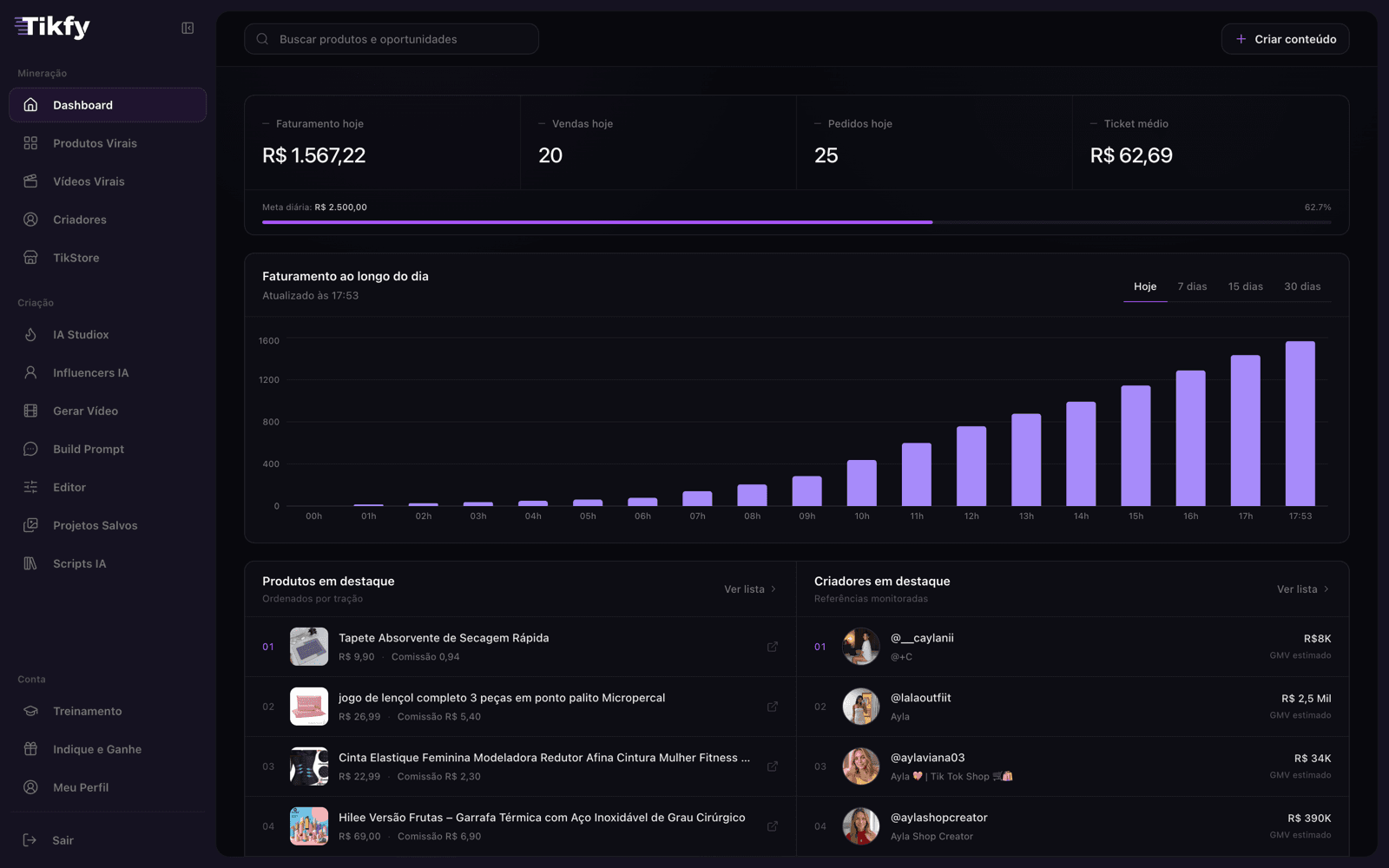
Tikfy
A SaaS for TikTok Shop affiliates: viral product mining, AI image and video generation and an editor that runs in the browser, sold to many users.

Velify
A dropshipping SaaS on monthly and six-month plans: supplier catalog, listings through the official marketplace API, AI and automatic payments to suppliers. The client arrived with the product sketched on paper, and we built it from the database up.
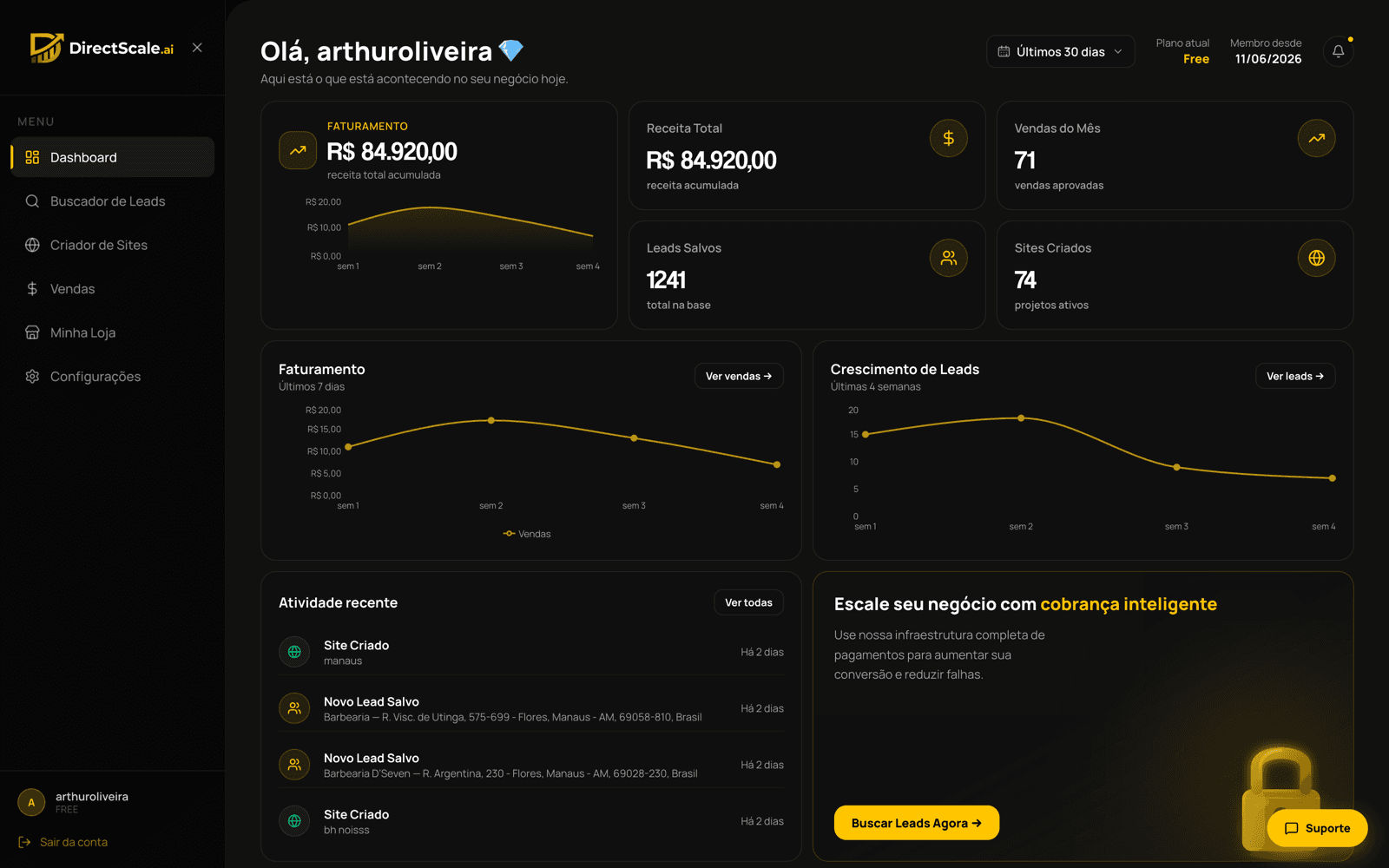
DirectScale
A sales platform that bundles a lead finder, a site builder and a revenue dashboard in one product, with accounts and plans.
Why work with VTA
- Our day sits inside yours. Send a question at nine in the morning and the answer comes back that same morning.
- We have taken SaaS products from the multi-tenant data model through to billing and a working subscription, and one senior team does the whole path. The people who design the schema are the ones who write the billing logic and the ones who pick up the phone when something breaks in production.
- You own everything we build: the code, the intellectual property and the accounts it runs on. No license to renew, and no lock-in if you bring the product in-house later.
Straight questions, straight answers
What does a SaaS development company charge for a build?
It depends on how much product you need before you can charge for it. What moves the number most: how many account types and roles, how complex billing is, how many systems the product talks to and whether a working MVP already exists. Our development projects start at US$ 25,000, and the fixed price for your first release comes in the proposal, with the scope and the dates.
How long until the MVP is live?
The MVP goes live in up to 10 weeks. It is the first sellable version: accounts, the core workflow and billing working. Heavy integrations or a bigger scope ship in phases after launch, and you see that in the proposal before you sign.
Who owns the code?
You do. The code and the intellectual property are yours. The repository and cloud accounts can sit under your name from day one, and documentation comes with them, so an in-house team can take over without depending on us.
Do I need everything defined before we talk?
No. An idea written in plain language, a document, a no-code prototype or a Figma file is enough. In the conversation we separate what goes into the MVP from what waits, and that becomes the scope in the proposal. There is no paid discovery phase first.
How do you handle multi-tenancy?
We decide it before the first feature, because it is the decision that is hardest to change later. Depending on the product, that means a tenant column enforced with row-level security, a schema per tenant, or separate databases for customers who require it. Roles, per-account settings and the audit trail come with it. You get the reasoning in writing, not just the choice.
Do you handle billing and subscriptions?
Yes, and it is usually the part founders underestimate. Trials, upgrades in the middle of a cycle, proration, taxes, failed cards, refunds and the reports your accountant asks for. We build it against Stripe or whichever processor fits your customers, including markets where cards are not the default way people pay.
Can you take over a SaaS another team started?
Yes. We read the code and the infrastructure first, then send a transition plan: what holds, what needs redoing and in what order. Sometimes the foundation holds and we build on it. Sometimes the tenant model needs redoing, and you hear that from us before you pay for a rewrite you did not plan for.
What happens after launch?
The same team stays on hosting, monitoring, fixes and the next phases, each with its own scope and date. Replies come the same day from the engineers who wrote the code, with working hours aligned with US business hours. If you hire an in-house team later, they get a documented project.
Guides on saas development company
- How much does it cost to build an MVP? 2026 market rangesPrice bands from agency profiles selling to US clients, the six things that move a quote, four ways to buy a first build, and where fixed scope stops helping.
- SaaS development cost in 2026: what US startups actually payPublic price bands for building a SaaS product, the recurring costs nobody puts in the quote, and the five decisions that move a build from five figures to six.
- How to choose a SaaS development company: 12 questionsTwelve questions to ask every SaaS development company you shortlist, with the weak answer and the strong answer to each, so proposals stop looking identical.
- MVP vs full product: the scope that survives 100 usersWhat breaks between the first and the hundredth user, which shortcuts are safe in an MVP, which ones become debt, and how to contract the second phase.
- Multi-tenant SaaS architecture explained for foundersWhat multi-tenant means, the three ways to separate customer data, how row-level security works in Postgres, and the decisions that are expensive to reverse.
- AI SaaS: building on LLM APIs without burning cashUnit economics for AI features: what a token costs at OpenAI, Anthropic and Google in 2026, prompt caching, smaller models, batch, quotas and a price table.
Tell us what you are building.
An engineer replies the same day. Development projects start at US$ 25,000.
Prefer a form? Get your quote here.